
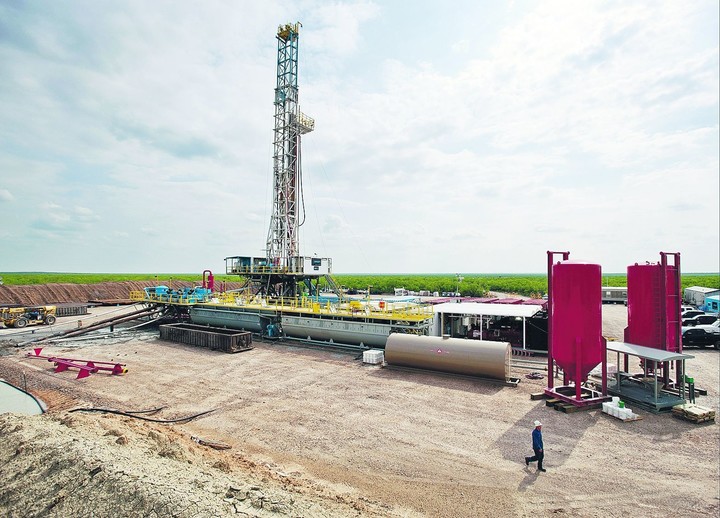
For years, Texas has ranked as the leading producer of oil and gas in the United States. A large portion of that production comes from the Permian Basin, an enormous region in West Texas and southeastern New Mexico that is home to more than 7,000 oil fields. Forty percent of U.S. crude oil originates there.
The United States is the world’s largest crude oil producer, with about 13.8 million barrels per day. The state governed by Greg Abbott has 32 refineries and produces approximately six million barrels daily, according to data from the Railroad Commission of Texas (RRC). Most of this comes from the Permian Basin.
The Permian Basin: The Cradle of Texas Oil
The RRC states that “the value of the Permian Basin lies in its enormous productive capacity.” It asserts that “this region represents nearly 40% of total U.S. oil production and around 15% of natural gas.”
It adds that “the Permian Basin’s subsurface hosts multiple geological formations, such as Wolfcamp, Spraberry, or Bone Spring, which allow for hydrocarbon extraction at various depths, from a few hundred meters to over five kilometers underground.” Much of the current activity takes place in the Delaware Basin and Midland Basin sub-basins.
Economic and Strategic Impact
However, the Permian Basin is relevant not only for its production but also for its economic impact. Oil industry activity generates thousands of direct and indirect jobs, attracts investment, and strengthens the industrial fabric of Texas. Furthermore, production from this region reduces U.S. energy dependence on other countries.
The growth potential of this basin remains significant. According to Geological Survey studies cited by the RRC, more than 46 billion barrels and enormous quantities of natural gas could be extracted in the Delaware Basin alone in the future.
The sustained growth of the Permian Basin has been driven by technological advances in the energy industry. “Enhanced recovery techniques have allowed for increased efficiency and extended the lifespan of fields, contributing to a sustained increase in production,” explains the RRC.
However, this development also poses significant challenges. Environmental management, water consumption, emissions, and the need for adequate energy infrastructure are fundamental issues for the region’s future.
In June of last year, Abbott signed a package of laws to offer more assurances to the oil and gas sector. At the ceremony, he warned that authorities would apply “the full weight of the law to combat oil theft in the Permian Basin and protect the critical role energy development plays in driving our economy,” as he enacted House Bill 494.
At that same event, the Republican governor approved a $123 million investment in The Beacon, a key project for the economic development of the Midland-Odessa region aimed at oil industry workers.